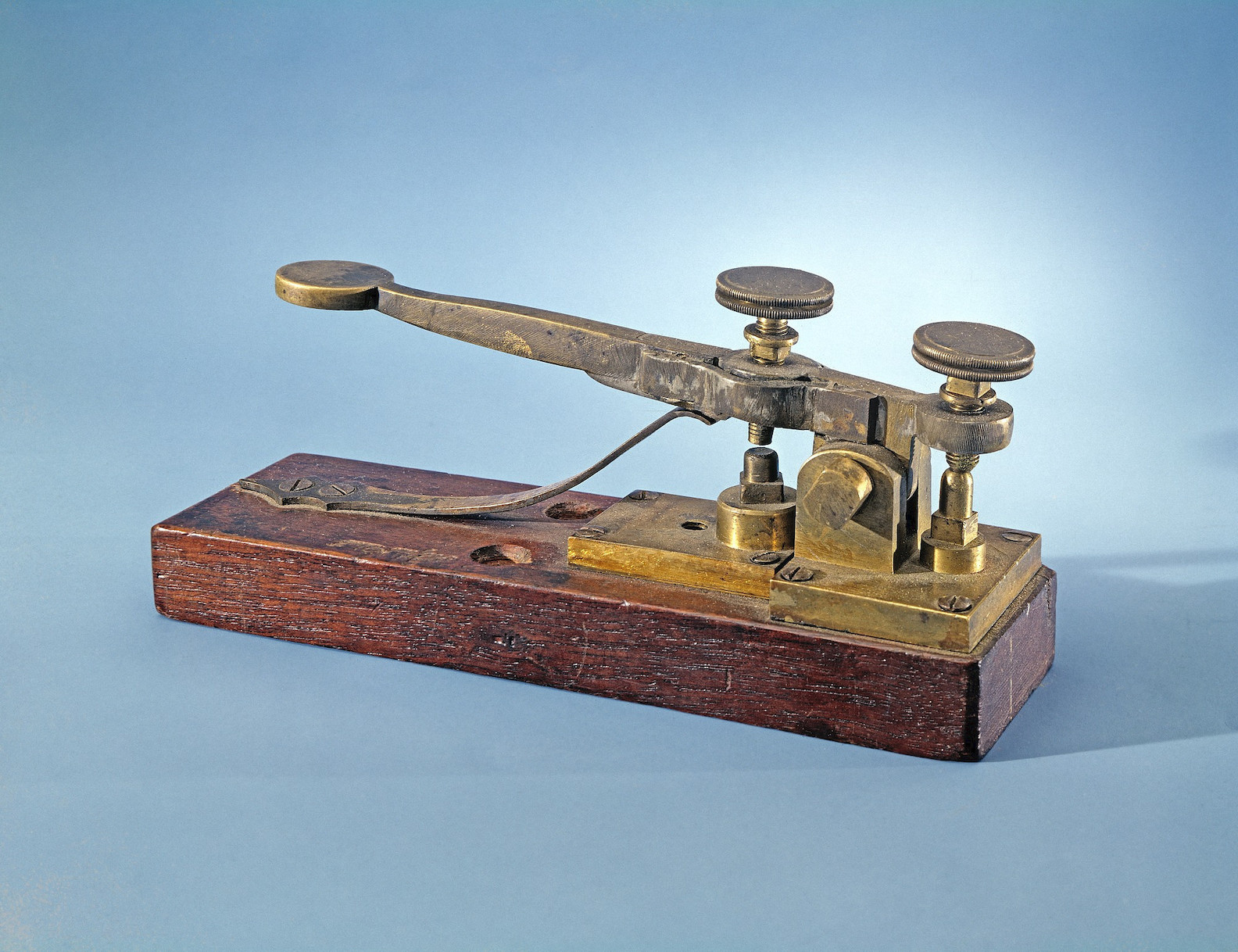
Did you know that the telegraph, one of the most important inventions in history, was partly inspired by tragedy? Samuel Morse, the inventor, missed his wife’s funeral because the news of her death traveled too slowly by mail. This heartbreak drove him to find a faster way to communicate over long distances.
Back in the early 1800s, communication was painfully slow. Sending a letter across the country, or even across the ocean, could take weeks or months. Imagine hearing important news too late to do anything about it! Morse wanted to change that, and he had some major breakthroughs to build on—like the voltaic pile, which allowed for a steady electric current, and the electromagnet, which could turn electricity into mechanical movement. These inventions, plus early experiments with the teleprinter, set the stage for Morse’s telegraph.
But it wasn’t an easy sell. Businesses didn’t want to invest in a system that required miles of expensive wiring. They didn’t believe the telegraph would make enough money to cover the costs. Morse, however, saw the potential others missed. He knew that faster communication would change everything—from business deals to news reporting to personal messages.
And he was right. Once the telegraph was up and running, it changed the world. Suddenly, news could travel in minutes, not months. Businesses made quicker decisions, newspapers could report on distant events in real-time, and governments used the telegraph to coordinate diplomacy and military operations. People were more connected than ever before.
Even though it was just a simple design, the invention of the telegraph brought about a new era in which people could communicate faster then ever, and this was only just the beginning.